Skin and supporting tissue
GHK-Cu skin studies
Collagen gives skin strength. A culture experiment increased its production without increasing cell numbers, which makes the result unusually specific.
Collagen cultures
Maquart and colleagues found increased collagen synthesis in human fibroblast cultures after exposure to GHK-Cu. Fibroblasts make much of the material around cells. Their collagen output increased independently of any change in cell number.
More collagen from a stable cell population is the intriguing feature. The culture produced more of a structural protein without simply containing more cells. It gives a concrete starting point for thinking about skin repair. The experiment measured production in a dish; wound closure on a person would be another outcome altogether.
GHK comprises three amino acids, glycine, histidine and lysine. GHK-Cu is the copper-bound complex. The tissue-remodelling literature describes changes involving collagen, elastin and the enzymes that rebuild their surroundings. Copper helps support cross-linking, the joining that gives these structural proteins their working strength.
Copper through excised skin
Getting a peptide to a cultured cell avoids the barrier that a cream meets first. A review of topical GHK identifies poor passage through intact outer skin as a central formulation problem. Changing the preparation can change how much reaches deeper tissue.
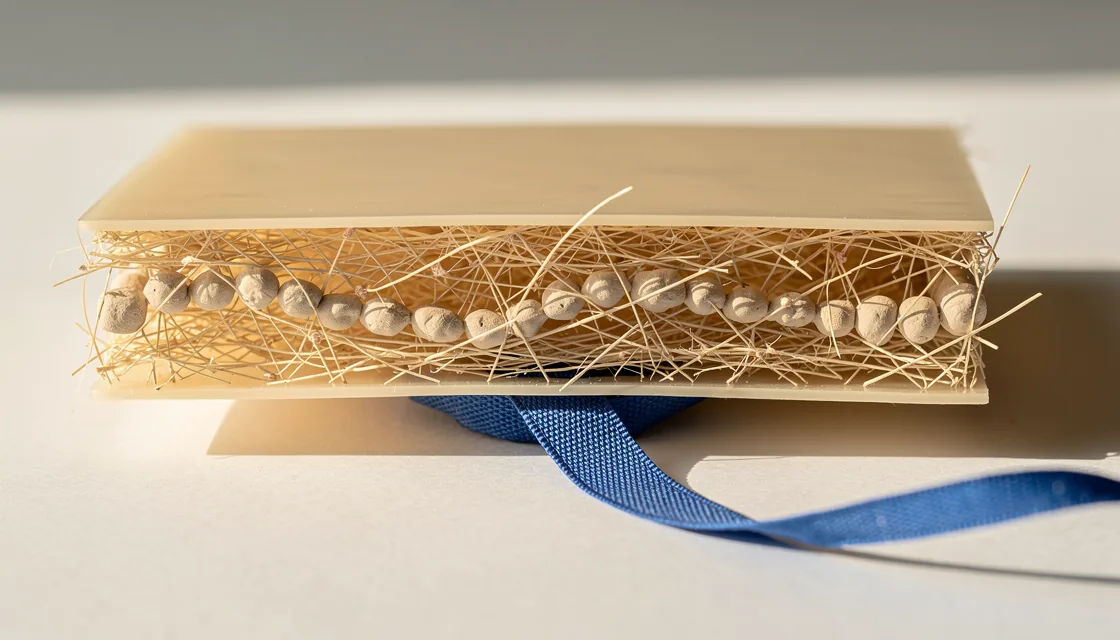
In an experiment using excised human skin, copper applied as GHK-Cu passed through the skin, and some remained within it. The measured substance was copper. The tissue had been removed from a person; the experiment did not track an intact copper-peptide complex through a living body.
The practical question of arrival deserves more attention than an ever-growing catalogue of destinations. A molecule’s activity and its ability to arrive at the relevant tissue have to meet somewhere.
Creams and genes
Reviews of small topical studies describe increased collagen, greater firmness, shallower wrinkles and other changes in skin appearance. Those are the human findings closest to the cosmetic use of Copper Tripeptide-1. The more recent anti-wrinkle review also discusses the delivery problems and modified preparations being investigated.
A separate review of GHK and gene-expression data describes changes in activity across repair, antioxidant and protein-clearance pathways. Much of that material comes from cell work and database analysis of GHK. Changes in gene activity can suggest biological jobs to investigate; their breadth gives no direct measure of how much healthier or younger a person becomes.
My enthusiasm is concentrated in the tangible skin questions: where collagen is made, how the surrounding material changes, and whether a preparation reaches those cells. The sweep of the gene claims leaves me less satisfied.
The scalp combination trial
The 6-month hair-growth trial in 45 men with androgenetic alopecia tested a complex of 5-aminolevulinic acid and GHK. Hair counts increased more in the active groups than with placebo, and the study reported no adverse events in any group.
The other ingredient deserves its place in the description. This was a GHK-containing combination, and its result cannot establish the effect of GHK-Cu alone. Hair on a scalp and collagen in a fibroblast culture are also different outcomes, despite sharing space in the peptide’s reputation.
Copper cautions
People describe firmer-feeling skin, softer lines, better hydration and thicker-looking hair. Other accounts mention redness, itching, dryness, breakouts or patchier pigment. These are anecdotal accounts, not clinical evidence; their mixture of preparations and accompanying routines makes cause especially difficult to assign.
The topical review gives the formulation a practical biological role: the peptide has to remain usable and cross the barrier. Loss of bound copper can alter the complex, and free copper can promote damaging oxidation. Possible copper accumulation with prolonged systemic exposure remains a theoretical concern, distinct from ordinary topical cosmetic use.
GHK-Cu has no FDA-approved medical indication. Its cosmetic history under the name Copper Tripeptide-1 provides no validated human pharmacokinetic basis for injections or whole-body treatment. Small skin studies leave broader safety, tissue distribution and long-term exposure questions unanswered. Missing human exposure measurements deserve priority, I think, over another expansive claim about rejuvenation.